How to Reduce Walking Pad Noise (Quiet Tips 2026)
Walking pads are marketed as quiet. And compared to a full-size treadmill running at 8 mph, they are. But "quieter than a treadmill" does not mean "silent." At 2 mph on a hard floor without a mat, a walking pad produces 48–55 dB — comparable to a running dishwasher. In a quiet apartment, that is enough to draw a complaint from the unit below.
The good news: most walking pad noise is fixable. The noise comes from specific, identifiable sources — foot impact, belt friction, motor strain, floor vibration — and each source has a targeted solution. You do not need to buy a new walking pad. You need to optimize the one you have.
Walking Pad Noise Sources (What Makes the Sound)
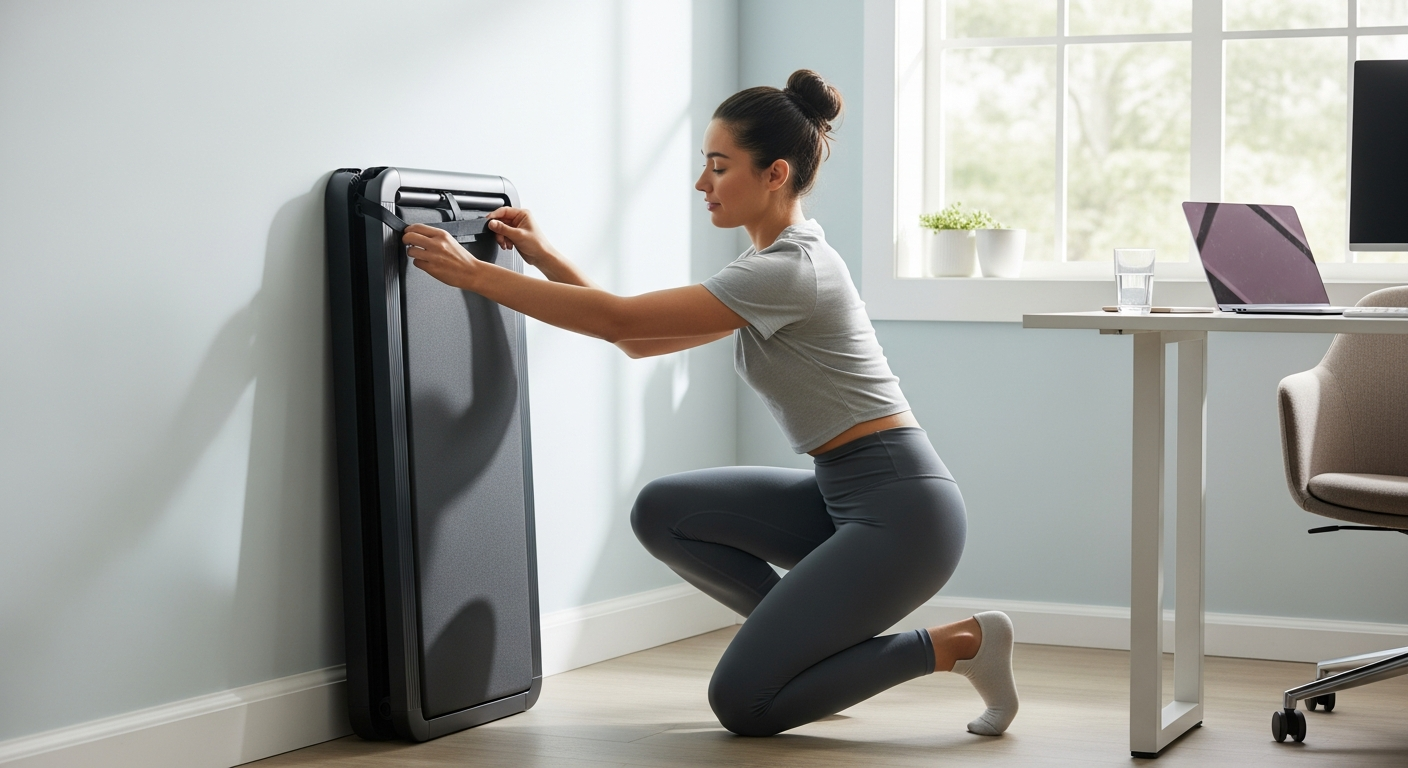 Hero visual for Walking Pad Noise Sources (What Makes the Sound)
The Four Noise Sources
| Source | Contribution | What It Sounds Like | Primary Fix |
|---|---|---|---|
| Foot impact | ~35% | Rhythmic thumping with each step | Cushioned shoes + mat |
| Belt-on-deck friction | ~25% | Low hum, scraping, or squeaking | Belt lubrication |
| Motor | ~25% | Constant hum; increases with speed and load | Lubrication (reduces load) + vent cleaning |
| Floor vibration | ~15% | Transmitted rumble felt/heard in adjacent rooms | Anti-vibration mat |
Why Each Source Matters
Foot impact is the largest single noise source. Every step creates an impact force that travels through the belt, through the pad frame, through the floor, and into the room (and rooms below). Heavier walkers, harder shoes, and faster speeds increase impact noise proportionally.
Belt-on-deck friction is the most controllable source. A well-lubricated belt sliding over a smooth deck is nearly silent. A dry belt on a dry deck creates audible scraping. This noise increases gradually as lubricant depletes — many owners do not notice because the change is slow.
Motor noise is inherent to the design. Brushless motors (WalkingPad R2, C2 Mini) are quieter than brushed motors (most budget pads). Motor noise increases when the belt is dry (motor works harder to overcome friction) and when vents are clogged (motor runs hotter and louder).
Floor vibration is the noise your neighbors hear. Impact and motor vibration travel through the floor structure to adjacent rooms and floors. A mat between the pad and the floor intercepts this vibration.
Noise Levels by Speed
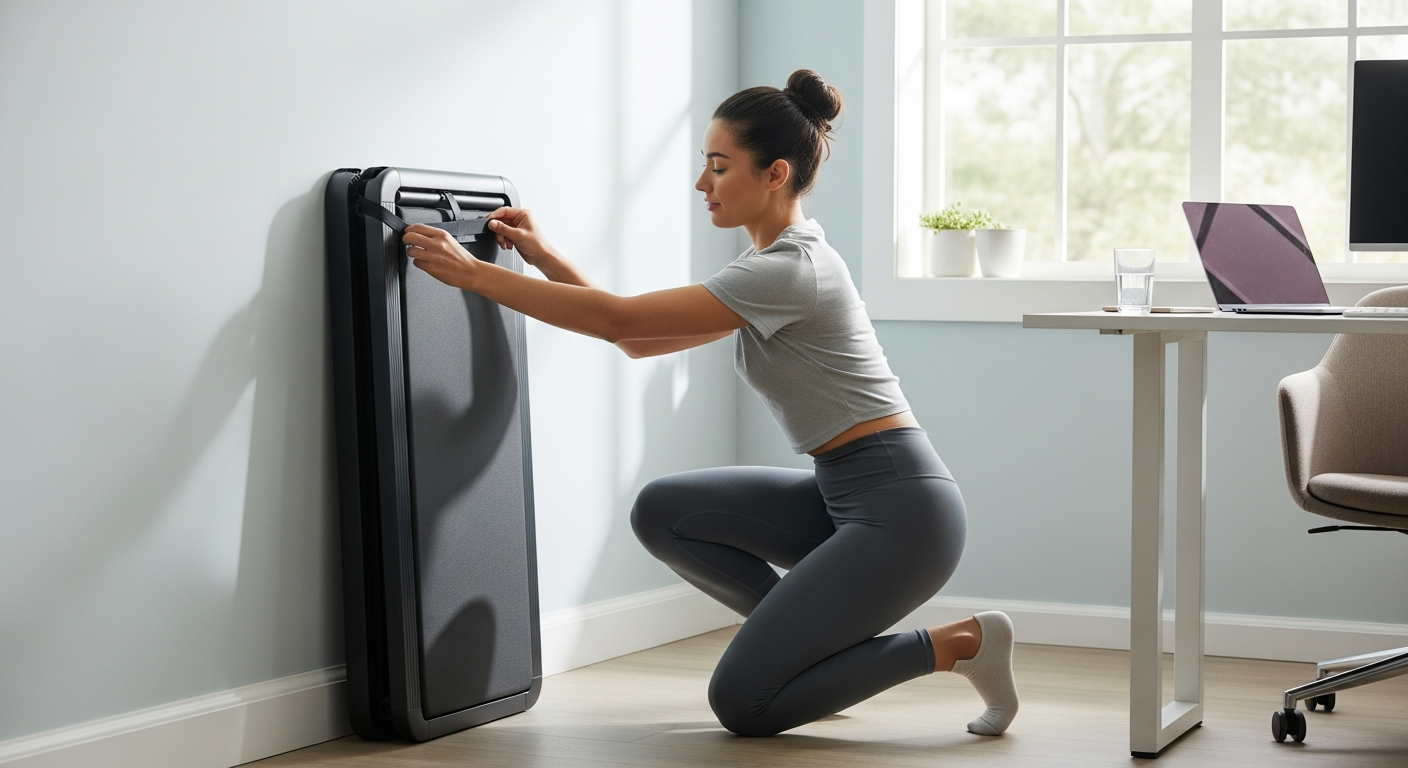 Comparison visual for Noise Levels by Speed
Approximate Decibel Levels (Well-Maintained Pad on Mat)
| Speed | dB Level | Comparable Sound | Noticeable in Adjacent Room? |
|---|---|---|---|
| 0.5 mph | 35–38 dB | Whisper | ❌ No |
| 1.0 mph | 38–42 dB | Library | ❌ No |
| 1.5 mph | 42–46 dB | Quiet office | ⚠️ Barely, through thin walls |
| 2.0 mph | 45–50 dB | Moderate conversation | ⚠️ Possibly, in quiet environments |
| 2.5 mph | 48–53 dB | Dishwasher | ⚠️ Yes, in adjacent rooms |
| 3.0 mph | 52–58 dB | Normal conversation | ✅ Yes |
| 3.5+ mph | 55–62 dB | Vacuum cleaner (distance) | ✅ Yes, clearly |
Without Mat (Hard Floor, No Noise Reduction)
| Speed | dB Level | Increase vs With Mat |
|---|---|---|
| 1.0 mph | 44–48 dB | +6 dB |
| 1.5 mph | 48–52 dB | +6 dB |
| 2.0 mph | 52–56 dB | +6 dB |
| 2.5 mph | 55–60 dB | +7 dB |
A 6 dB increase represents approximately a doubling of perceived loudness. The mat makes a substantial, audible difference.
The Anti-Vibration Mat (Most Effective Fix)
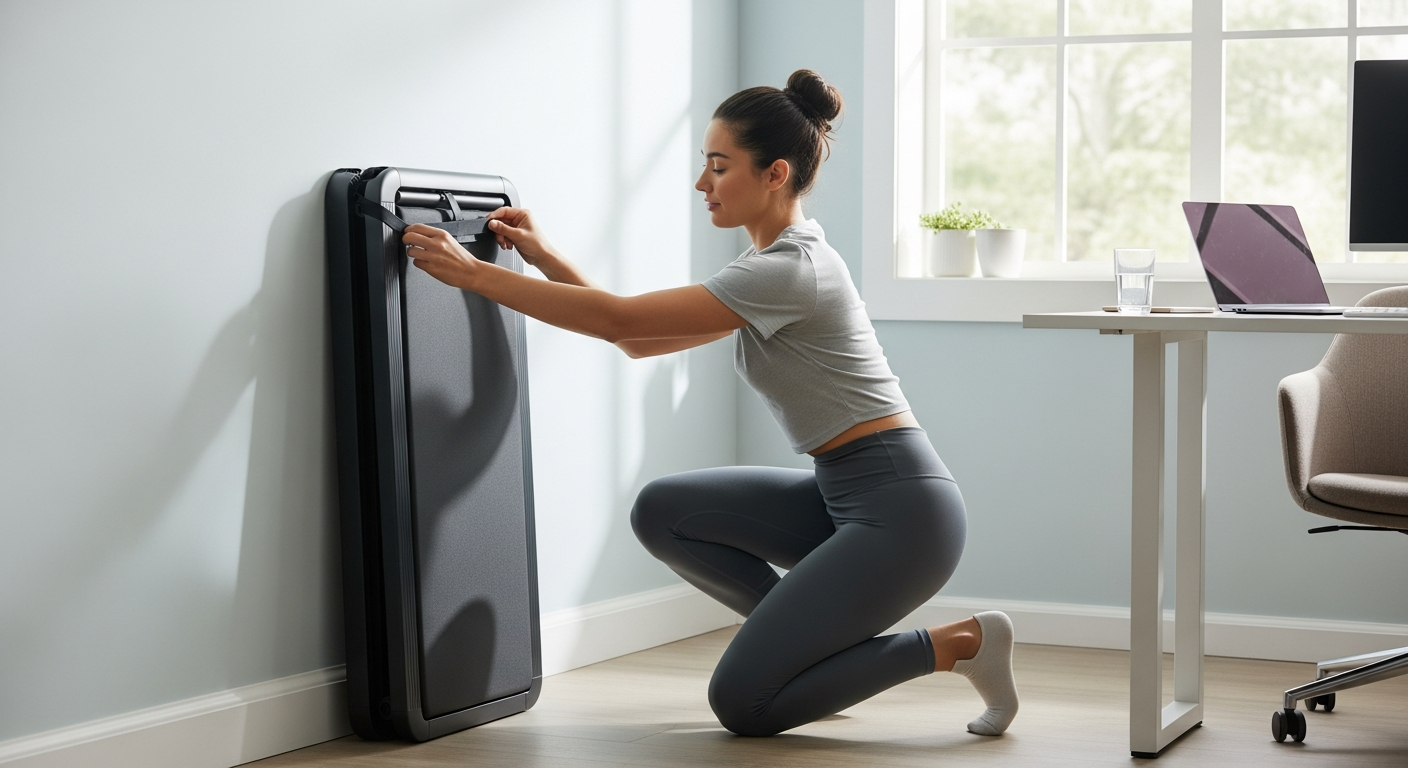 Infographic visual for The Anti-Vibration Mat (Most Effective Fix)
Why a Mat Works
A dense rubber mat between the walking pad and the floor acts as a vibration absorber. Impact energy from footsteps and motor vibration is converted to heat in the rubber instead of being transmitted through the floor. This reduces both the noise you hear in the room and the vibration your neighbors feel below.
Mat Comparison
| Mat Type | Thickness | Noise Reduction | Vibration Reduction | Price | Recommendation |
|---|---|---|---|---|---|
| No mat (bare floor) | — | Baseline | Baseline | $0 | ❌ Not recommended |
| Yoga mat | 3–5mm | 10–15% | 10–15% | $10–20 | ❌ Too thin; shifts |
| Treadmill equipment mat | 4–6mm | 25–35% | 30–40% | $20–40 | ✅ Good — minimum recommended |
| Dense rubber gym mat | 8–12mm | 35–50% | 40–55% | $30–50 | ✅ Better — best value |
| Horse stall mat (rubber) | 12–18mm | 45–60% | 50–65% | $40–60 | ✅ Best — maximum dampening |
| Acoustic isolation pad | 15–25mm | 50–70% | 55–75% | $60–100 | ✅ Premium — for noise-sensitive situations |
Best Mat Choices
| Situation | Recommended Mat | Why |
|---|---|---|
| General home use | 6mm treadmill equipment mat (~$25) | Adequate noise reduction; affordable; easy to find |
| Apartment (neighbor below) | 12mm dense rubber mat (~$45) | Maximum vibration dampening for floor transmission |
| Apartment (thin floors) | Horse stall mat + carpet remnant layered | Double-layer absorption for worst-case floor transmission |
| Home office (noise-sensitive) | Acoustic isolation pad (~$80) | Premium dampening for quiet rooms |
| Budget | Treadmill mat ($20) | Minimum effective investment |
For mat recommendations, see our best walking pad mat guide.
Belt Lubrication for Noise Reduction
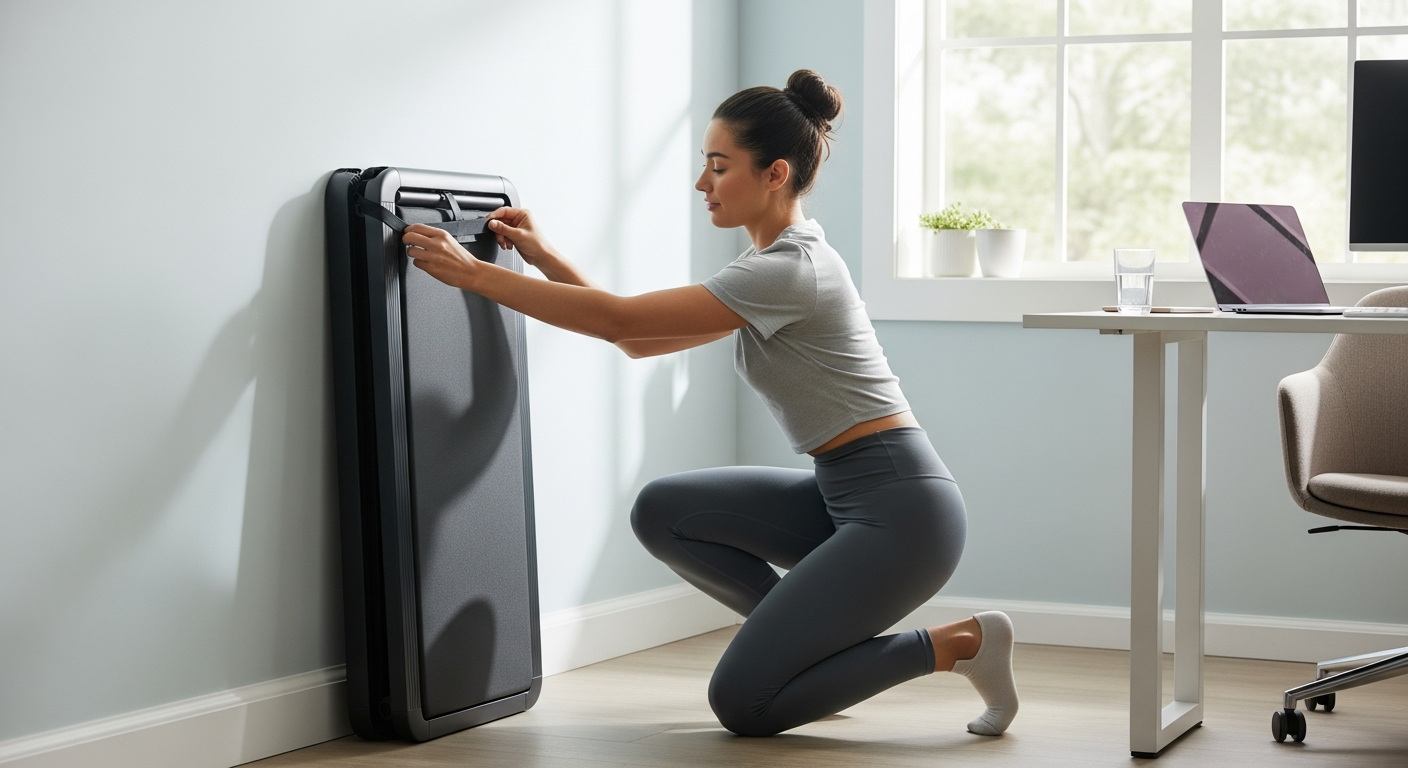 Setup visual for Belt Lubrication for Noise Reduction
How Lubrication Reduces Noise
Belt lubrication reduces noise through two mechanisms:
| Mechanism | Noise Reduction |
|---|---|
| Direct friction noise | Belt sliding on deck makes less scraping/squeaking sound when lubricated |
| Indirect motor noise | Motor works 20–40% less hard on a lubricated belt — runs quieter and cooler |
Before and After Lubrication
| Metric | Dry Belt | Freshly Lubricated Belt |
|---|---|---|
| Belt noise at 1.5 mph | Audible scraping/humming | Nearly silent |
| Motor noise at 1.5 mph | Moderate hum (motor straining) | Light hum (motor at ease) |
| Overall noise at 1.5 mph | 48–52 dB | 42–46 dB |
| Noise reduction | — | ~6 dB (roughly half as loud) |
Quick Lubrication for Noise
If your walking pad has become louder and you suspect lubrication is the cause:
| Step | Action | Time |
|---|---|---|
| 1 | Turn off, unplug | 15 sec |
| 2 | Lift one side of the belt at center | 10 sec |
| 3 | Apply silicone lubricant in a zigzag line on the deck under the belt | 30 sec |
| 4 | Repeat on the other side | 30 sec |
| 5 | Lower belt, plug in, run at 1.0 mph for 3 minutes (empty) | 3 min |
| 6 | Wipe any excess from belt edges | 15 sec |
Total: ~5 minutes. Use 100% silicone treadmill belt lubricant only. For the full lubrication process, see our walking pad maintenance guide.
Belt Tension and Alignment Fixes
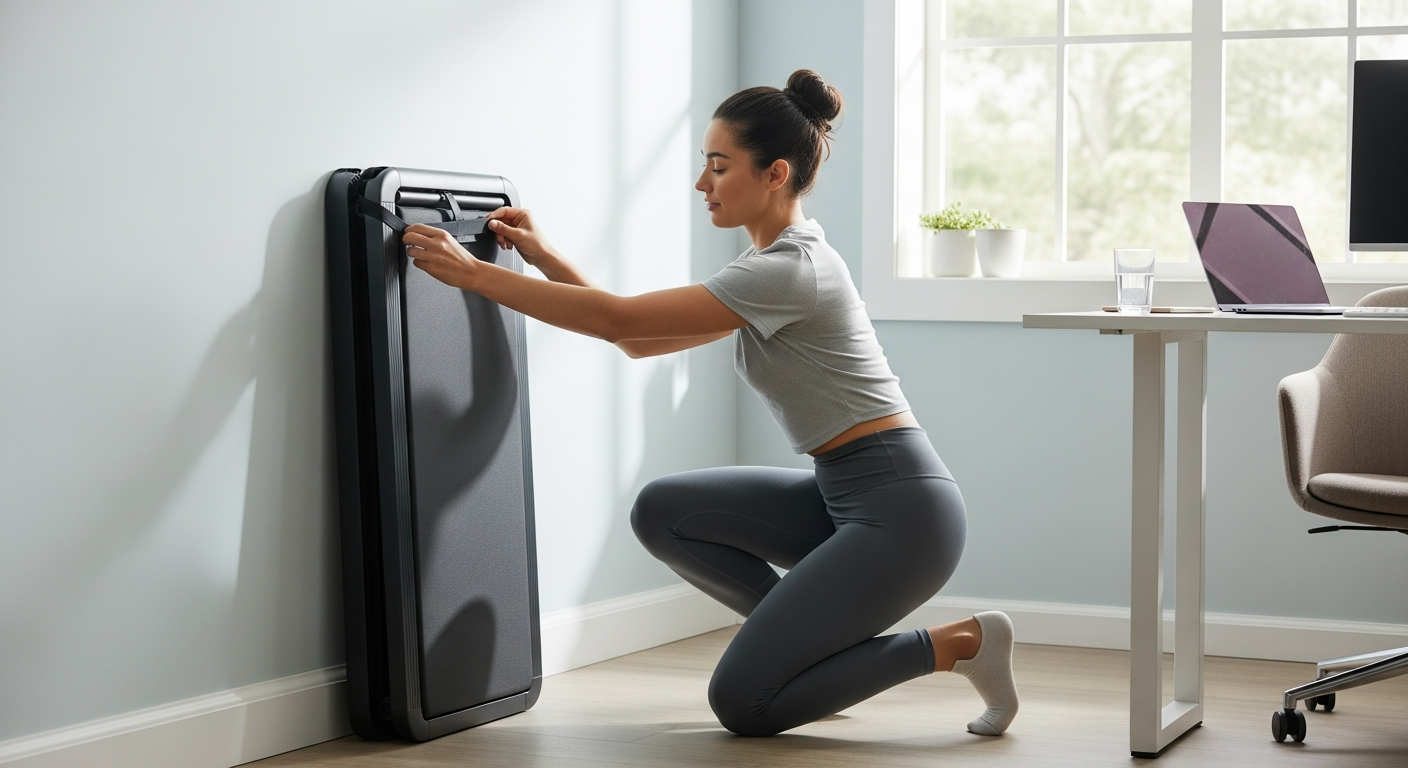 Detail visual for Belt Tension and Alignment Fixes
Tension-Related Noise
| Problem | Sound | Fix |
|---|---|---|
| Belt too loose | Slapping sound — belt flaps against deck with each step | Tighten rear tension bolts ¼ turn each side |
| Belt too tight | High-pitched motor strain — motor works harder against resistance | Loosen rear tension bolts ¼ turn each side |
| Belt off-center | Rubbing sound from one edge — belt contacts the side frame | Adjust tension bolts to center (tighten the side the belt drifts toward) |
How to Check
- Turn off and unplug
- Lift the belt at the center of the deck
- Correct tension: 2–3 inches of lift
- Under 2": too tight. Over 3": too loose
- Check centering: the belt should sit evenly between both side rails with equal gap on each side
Tension Adjustment
| Step | Action |
|---|---|
| 1 | Locate rear tension bolts (hex bolts, one per side, at the back of the pad) |
| 2 | Adjust both sides equally — ¼ turn at a time |
| 3 | Clockwise = tighten (belt tighter). Counterclockwise = loosen |
| 4 | Recheck lift height after each adjustment |
| 5 | Run the pad empty at low speed — listen for noise changes |
| 6 | Walk on the pad — confirm the belt does not slip under your weight |
Floor Surface and Placement
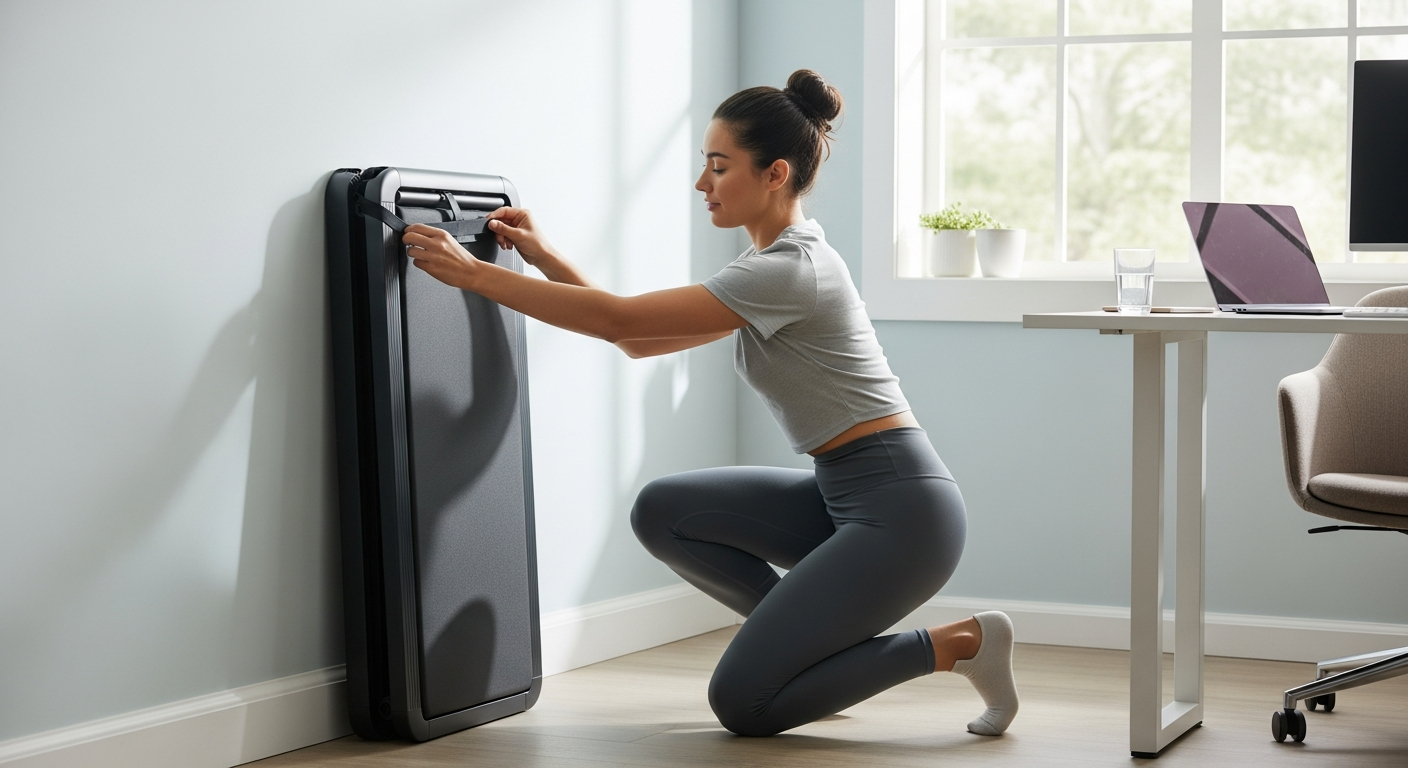 Lifestyle visual for Floor Surface and Placement
Floor Type and Noise Transmission
| Floor Type | Noise to Room | Vibration Below | Recommendation |
|---|---|---|---|
| Hardwood | ⚠️ Moderate (resonates) | ⚠️ High (rigid transmission) | Mat essential; dense rubber mat recommended |
| Laminate | ⚠️ Moderate (resonates more than wood) | ⚠️ High | Mat essential |
| Tile / concrete | ✅ Low (dense floor absorbs) | ✅ Low (mass blocks transmission) | Mat recommended for pad protection |
| Carpet (thin) | ✅ Low (some absorption) | ⚠️ Moderate (thin carpet transmits) | Mat on top of carpet for stability |
| Carpet (thick) | ✅ Very low | ✅ Low | Mat optional for stability; carpet absorbs well |
Room Placement
| Placement Tip | Noise Benefit |
|---|---|
| Center of room (away from walls) | Walls amplify vibration; center position reduces reflection |
| Away from shared walls (apartment) | Reduces direct vibration transmission to neighboring unit |
| Not directly above a bedroom below | Footstep vibration is most noticeable in quiet rooms |
| On a concrete slab (ground floor) | Concrete absorbs vibration; no unit below to disturb |
| On mat, on hard floor | Mat + hard floor is better than mat + thin carpet for stability |
Footwear for Quieter Walking
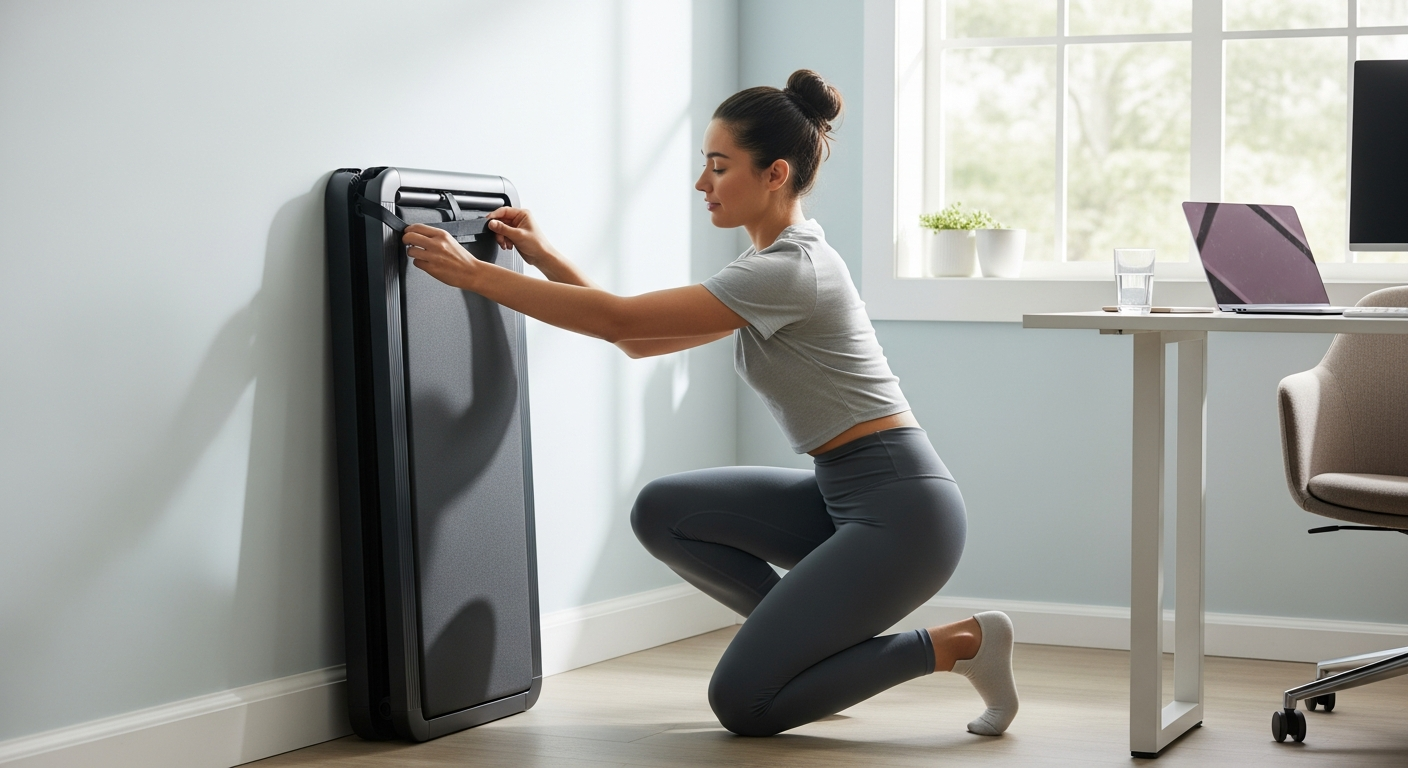 Product Lineup visual for Footwear for Quieter Walking
Shoe Type and Noise Impact
| Footwear | Impact Noise | Walking Pad Safety | Recommendation |
|---|---|---|---|
| Cushioned running shoes | ✅ Quietest — thick midsole absorbs impact | ✅ Safe — traction + support | ✅ Best choice |
| Walking shoes (moderate cushion) | ✅ Quiet | ✅ Safe | ✅ Good choice |
| Cross-trainers | ✅ Quiet | ✅ Safe | ✅ Good choice |
| Minimalist/thin-sole shoes | ⚠️ Moderate — less absorption | ✅ Safe | ⚠️ OK but noisier |
| Hard-soled shoes | ❌ Loud — transmits maximum impact | ✅ Safe but noisy | ❌ Avoid |
| Sandals / flip-flops | ⚠️ Moderate + slapping | ❌ Unsafe — no foot security | ❌ Never |
| Bare feet | ⚠️ Moderate | ❌ Unsafe — no traction or support | ❌ Never |
| Socks only | ⚠️ Moderate | ❌ Unsafe — slip risk | ❌ Never |
The Shoe Recommendation
Wear the most cushioned athletic shoes you own. Running shoes with thick foam midsoles (Nike, ASICS, Brooks, New Balance) absorb the most impact energy before it reaches the belt. This reduces both the noise you hear and the vibration transmitted through the floor.
Apartment-Specific Tips
The Apartment Noise Stack
For maximum noise reduction in apartment settings, layer all available solutions:
| Layer | Solution | Noise Reduction | Cost |
|---|---|---|---|
| 1 | Dense rubber mat under pad | 35–50% | $30–50 |
| 2 | Belt lubrication (silicone) | 15–25% additional | $10 |
| 3 | Cushioned running shoes | 10–20% additional | $0 (use existing) |
| 4 | Walk at 1.0–1.5 mph (not 2.5+) | 15–25% additional | Free |
| 5 | Rubber pads under desk legs | 5–10% additional (desk vibration) | $10 |
| Combined | All layers | ~60–75% total reduction | ~$50–70 |
Time-of-Day Guidelines for Apartments
| Time | Recommendation | Speed Limit |
|---|---|---|
| 6:00–8:00 AM | ⚠️ Use with caution — neighbors may be sleeping | 1.0 mph max |
| 8:00 AM–9:00 PM | ✅ Reasonable hours — walk freely | Your comfortable speed |
| 9:00–10:00 PM | ⚠️ Use with caution — neighbors may be winding down | 1.5 mph max |
| 10:00 PM–6:00 AM | ❌ Avoid — quiet hours in most buildings | Do not use |
Communication with Neighbors
The proactive approach: before your neighbor complains, mention that you use a walking pad and ask if they can hear it. Most neighbors appreciate being asked. If they can hear it, implement the full noise stack above and ask them to check again. This turns a potential conflict into a cooperative solution.
Noise Reduction by Walking Pad Model
Noise Levels at 1.5 mph (On Mat, Lubricated, Cushioned Shoes)
| Model | Motor Type | Noise Level | Noise Rating |
|---|---|---|---|
| WalkingPad R2 | Brushless | ~38–42 dB | ✅ Quietest |
| WalkingPad C2 Mini | Brushless | ~40–44 dB | ✅ Very quiet |
| UMAY Under Desk | Brushed | ~42–46 dB | ✅ Quiet |
| Sperax | Brushed | ~44–48 dB | ⚠️ Moderate |
| Goplus 2-in-1 | Brushed | ~46–50 dB | ⚠️ Moderate |
| REDLIRO | Brushed | ~46–50 dB | ⚠️ Moderate |
| UREVO 2T | Brushed | ~44–48 dB | ⚠️ Moderate |
| Budget (<$150) | Brushed | ~48–55 dB | ❌ Louder |
Brushless vs Brushed Motors
| Motor Type | Noise Character | Typical dB Advantage | Found In |
|---|---|---|---|
| Brushless | Smooth, even hum; minimal vibration | 4–8 dB quieter | WalkingPad R2, C2 Mini; premium models |
| Brushed | Slightly rougher hum; more vibration | Baseline | Most models under $350 |
The motor type is fixed — you cannot change it. If noise is your primary concern and you have not yet purchased, choose a brushless motor model. If you already own a brushed motor model, the mat + lubrication + shoes stack closes most of the gap.
Diagnosing New or Unusual Noises
Noise Diagnosis Table
| New Sound | Most Likely Cause | Fix | Urgency |
|---|---|---|---|
| Squeaking during operation | Belt needs lubrication | Lubricate with silicone | ⚠️ Soon |
| Rhythmic thumping (once per belt rotation) | Debris under belt OR belt seam separating | Inspect under belt; remove debris | ⚠️ Soon |
| Grinding from motor area | Motor bearing wear | Contact service | ❌ Urgent |
| Slapping/flapping belt sound | Belt too loose | Tighten tension bolts | ⚠️ Soon |
| High-pitched whine | Belt too tight OR motor under excessive load | Check tension; reduce speed | ⚠️ Soon |
| Clicking at regular intervals | Debris in roller | Inspect front and rear rollers | ⚠️ Soon |
| Burning smell | Motor overheating; electrical fault | Stop immediately; unplug | ❌ Urgent — do not use |
| Increased general noise (gradual) | Lubricant depletion | Lubricate belt | ✅ Routine |
| Vibration increase (no sound change) | Mat has shifted or compressed | Reposition or replace mat | ✅ Routine |
| Intermittent buzzing | Loose component or panel | Check screws and covers | ⚠️ Moderate |
Frequently Asked Questions
How loud are walking pads?
40–55 dB at walking speeds (1.0–2.5 mph) — quiet conversation to dishwasher level. At 0.5–1.0 mph, quality pads are 38–42 dB (library quiet). Noise increases with speed, dry belts, and hard floors.
Will a mat reduce noise?
Yes — the single most effective fix. Dense rubber mats reduce noise 30–50% by absorbing vibration before it reaches the floor. Minimum: 6mm treadmill mat ($20). Best: 12mm+ dense rubber ($40–60).
Can I use one in an apartment?
Yes — with a thick rubber mat, lubricated belt, cushioned shoes, and speeds under 2 mph. This combination reduces noise 60–75%. Communicate with neighbors proactively.
Does lubrication reduce noise?
Yes — significantly. A dry belt is the most common cause of gradual noise increase. Silicone lubrication reduces belt friction noise and motor strain hum by ~6 dB (roughly half as loud).
Why is my walking pad suddenly louder?
Most likely: belt needs lubrication (gradual increase). Other causes: wrong belt tension, debris under belt, or motor bearing wear. Start with lubrication — it fixes most cases.
What is the quietest walking pad?
WalkingPad R2 (~38–42 dB at 1.5 mph) — brushless motor is significantly quieter than brushed alternatives. Expect to pay $400+ for the quietest models.
Do shoes affect noise?
Yes — cushioned running shoes are the quietest (absorb impact). Hard-soled shoes are the loudest (transmit impact). Wear the most cushioned athletic shoes you own.
Can I soundproof under the pad?
Not fully, but layering a dense rubber mat + carpet remnant reduces vibration transmission by 50–70%. Combined with lubrication and cushioned shoes, this makes most walking pads apartment-compatible.
Sources and Methodology
This guide covers walking pad noise reduction based on acoustic principles, vibration dampening physics, and practical apartment living considerations.
Acoustic References:
- Decibel levels: approximate measurements at 3 feet from the walking pad; individual models vary based on motor type, belt condition, and floor surface
- Noise reduction percentages: estimated based on vibration dampening properties of rubber and foam materials at typical walking pad frequencies (50–200 Hz)
- 6 dB = approximately doubling/halving of perceived loudness — standard psychoacoustic relationship
Material References:
- Dense rubber (12mm+): effective vibration isolation for low-frequency impact — used in industrial equipment mounting
- Silicone treadmill belt lubricant: reduces sliding friction coefficient by 60–80%, proportionally reducing friction-generated noise and motor load noise
- Cushioned shoe midsoles: EVA foam absorbs 20–40% of foot strike impact energy
Methodology notes:
- Decibel readings are approximate ranges based on typical walking pad noise profiles; individual results vary by model, maintenance state, and environment
- Noise reduction percentages are cumulative estimates when solutions are layered; actual results depend on specific conditions
- "Apartment-friendly" is defined as noise levels unlikely to be audible in an adjacent unit through standard construction (concrete slab or wooden joist floors with standard insulation)
- Time-of-day guidelines reflect typical residential noise ordinance hours; check your building's specific quiet hours
- This guide provides practical noise reduction information, not acoustic engineering specifications
- We may earn a commission on purchases at no additional cost to you; affiliate relationships do not influence recommendations
Internal links referenced:
Visual Guide Gallery
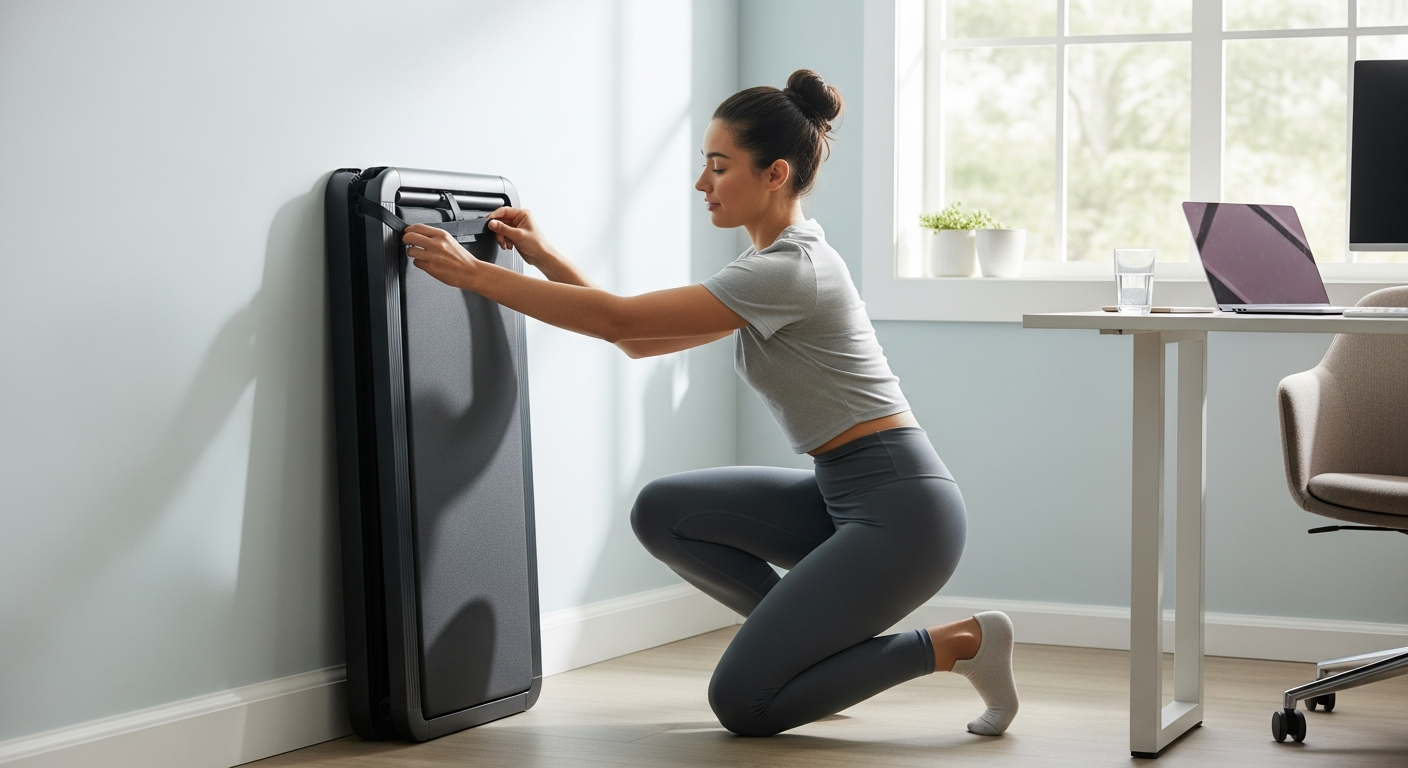 Tips visual for Visual Guide Gallery