Walking Pad vs Treadmill for Home Use: Which Is Better in 2026?
The choice between a walking pad and a traditional treadmill for home use comes down to your actual goal: if you want to add daily movement while working from home, a walking pad is the smarter, space-saving pick. If you're training for runs or want a dedicated cardio machine, a treadmill delivers the power and features you need — at the cost of significantly more space and noise.
Table of Contents
- What Is a Walking Pad?
- What Is a Traditional Treadmill?
- Side-by-Side Comparison: Walking Pad vs Treadmill
- Speed and Performance
- Space and Storage
- Noise Levels
- Price and Value
- Ideal Use Cases
- Who Should Buy a Walking Pad Instead
- Who Should Buy a Traditional Treadmill Instead
- Setup and Maintenance
- Health Benefits Compared
- Common Mistakes to Avoid
- Frequently Asked Questions
- Final Recommendation
What Is a Walking Pad?
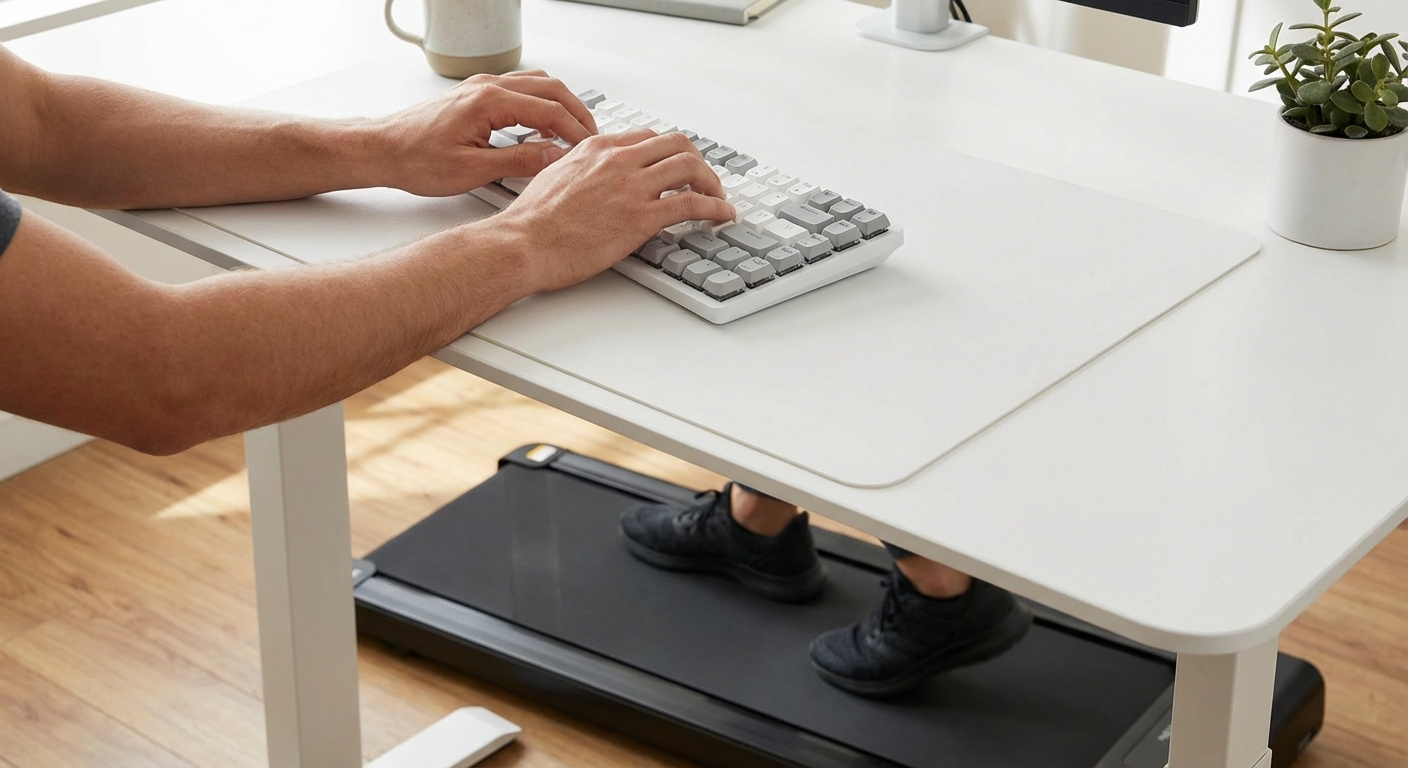
A walking pad — also called an under desk treadmill or mini treadmill — is a low-profile, compact walking machine designed primarily for use while standing at a desk or performing light daily activities. Most walking pads are between 4 and 6 inches tall, with a flat running belt that sits close to the ground. They typically lack handlebars, large console displays, and incline settings, prioritizing portability and quiet operation over performance features.
Walking pads first gained popularity in Asia, particularly in Japan and China, where small living spaces made traditional fitness equipment impractical. The concept migrated westward as remote work became more common, and today they're a staple in home office setups worldwide. Brands like WalkingPad (KingSmith), UREVO, and Sperax dominate the market, offering models that range from basic walk-only units to dual-mode machines that support light jogging.
The defining characteristic of a walking pad is its form factor. Because it's designed to slide under a desk, sit in a living room corner, or fold into a closet, it solves the single biggest barrier to home cardio equipment: space. For people who live in apartments, condos, or smaller homes, a walking pad may be the only viable cardio option that doesn't require a dedicated gym room.
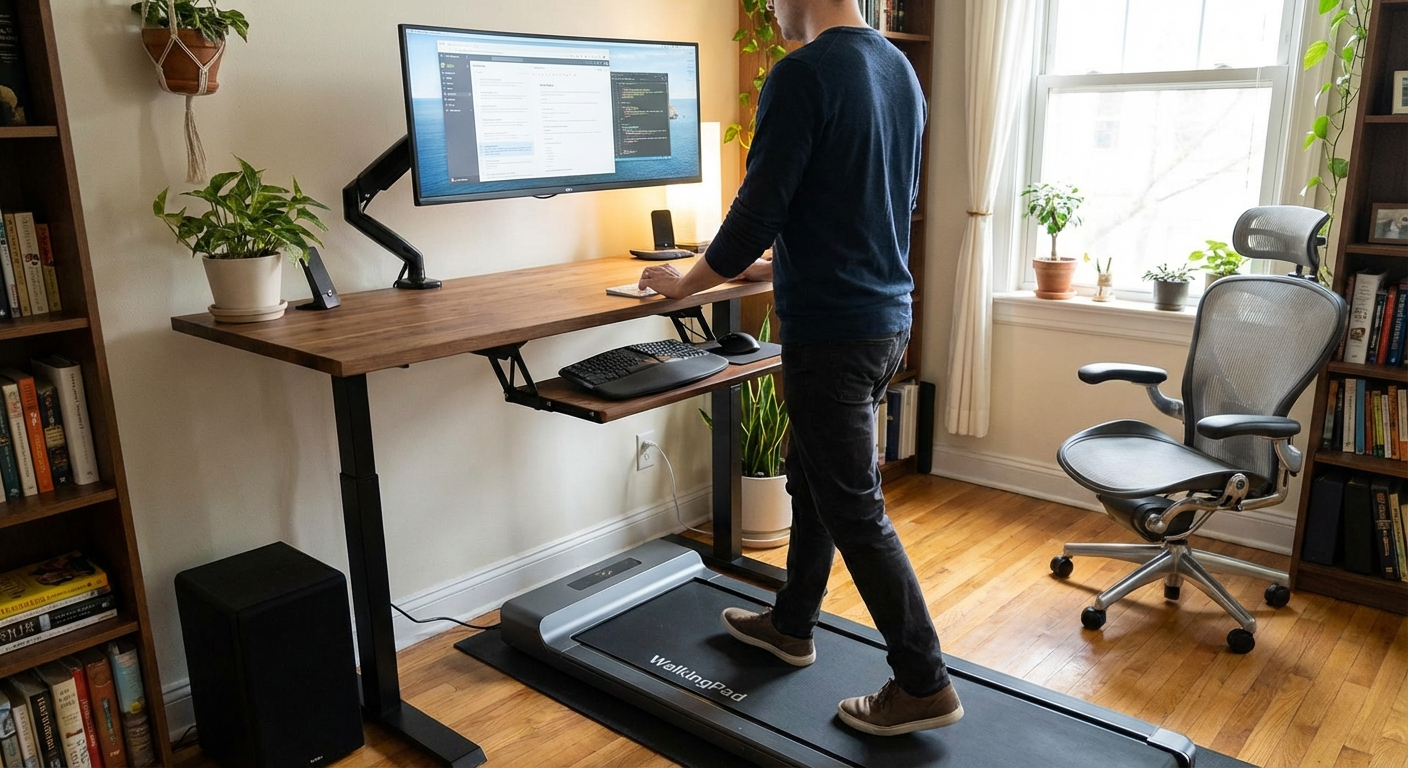
If you're working from home and spend 6–8 hours at a desk, a walking pad lets you add thousands of daily steps without carving out a separate exercise session. Research from the British Journal of Sports Medicine found that breaking up prolonged sitting with brief walking intervals improves metabolic markers, even when the walking is low-intensity. A walking pad makes that kind of incidental movement practical and consistent.
What Is a Traditional Treadmill?
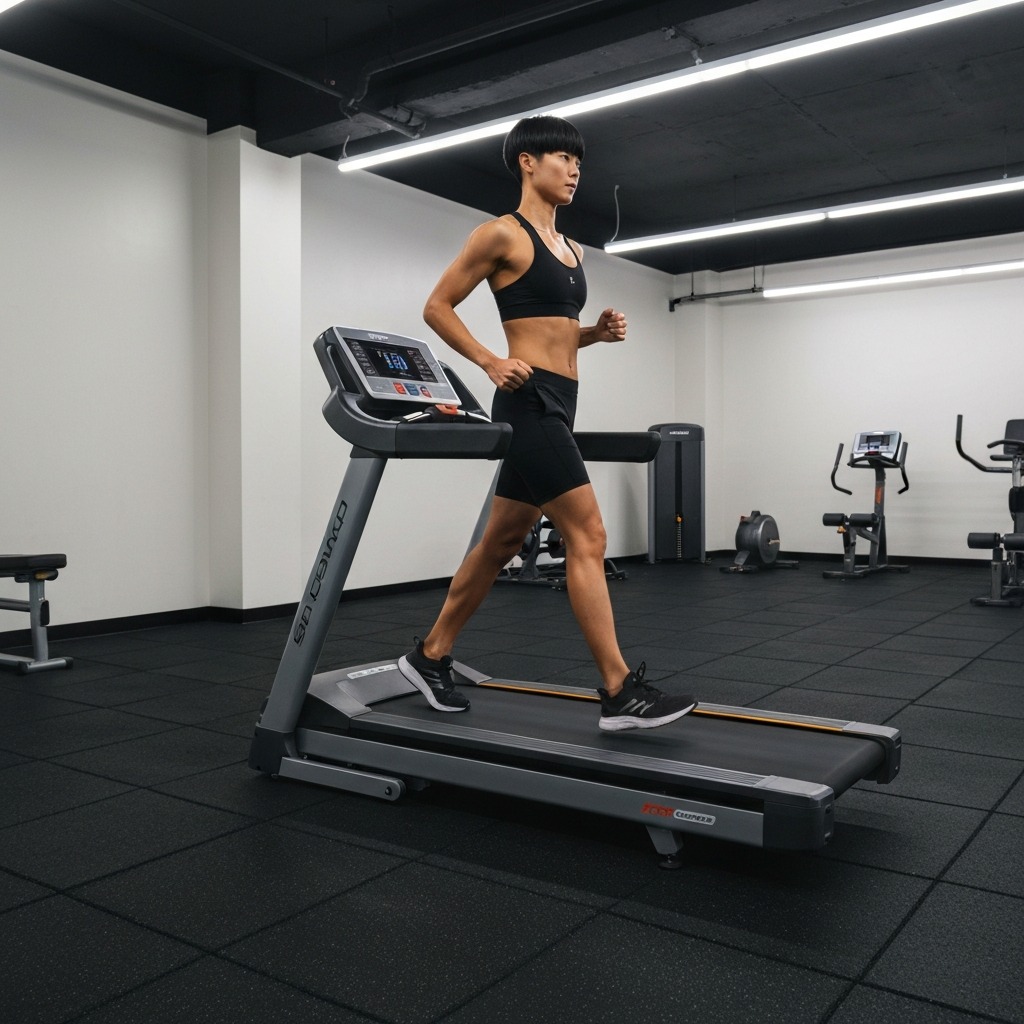
A traditional treadmill is a full-sized cardio machine designed for walking, jogging, and running. It features a longer running deck (typically 50–60 inches), a more powerful motor (2.0–4.0 HP continuous duty), and a console with preset workout programs, speed controls, and often incline settings. Treadmills also include safety features like emergency stop clips, handrails, and larger display screens.
Traditional treadmills are what you'd find in a commercial gym or fitness center. Home treadmills range from entry-level models with basic features to high-end machines with touchscreen displays, decline options, and streaming integrations. The category includes both folding treadmills (which fold upright for storage) and non-folding (permanent) models.
The treadmill's primary advantage over a walking pad is versatility and performance. A quality treadmill can support running at 10–12 mph, handle incline training up to 15%, and accommodate users up to 350–400 lbs. Walking pads, by contrast, are purpose-built for walking — and while some models support light jogging, none can match the running experience of a proper treadmill.
If your fitness goals include training for a 5K, 10K, half marathon, or any running event, a walking pad will not get you there. Similarly, if you want high-intensity interval training (HIIT) on an incline, a walking pad simply lacks the motor power and belt length to deliver that experience safely or effectively.
For a detailed breakdown of specific walking pad models and how they compare to entry-level treadmills, see our best walking pads of 2026 guide.
Side-by-Side Comparison: Walking Pad vs Treadmill
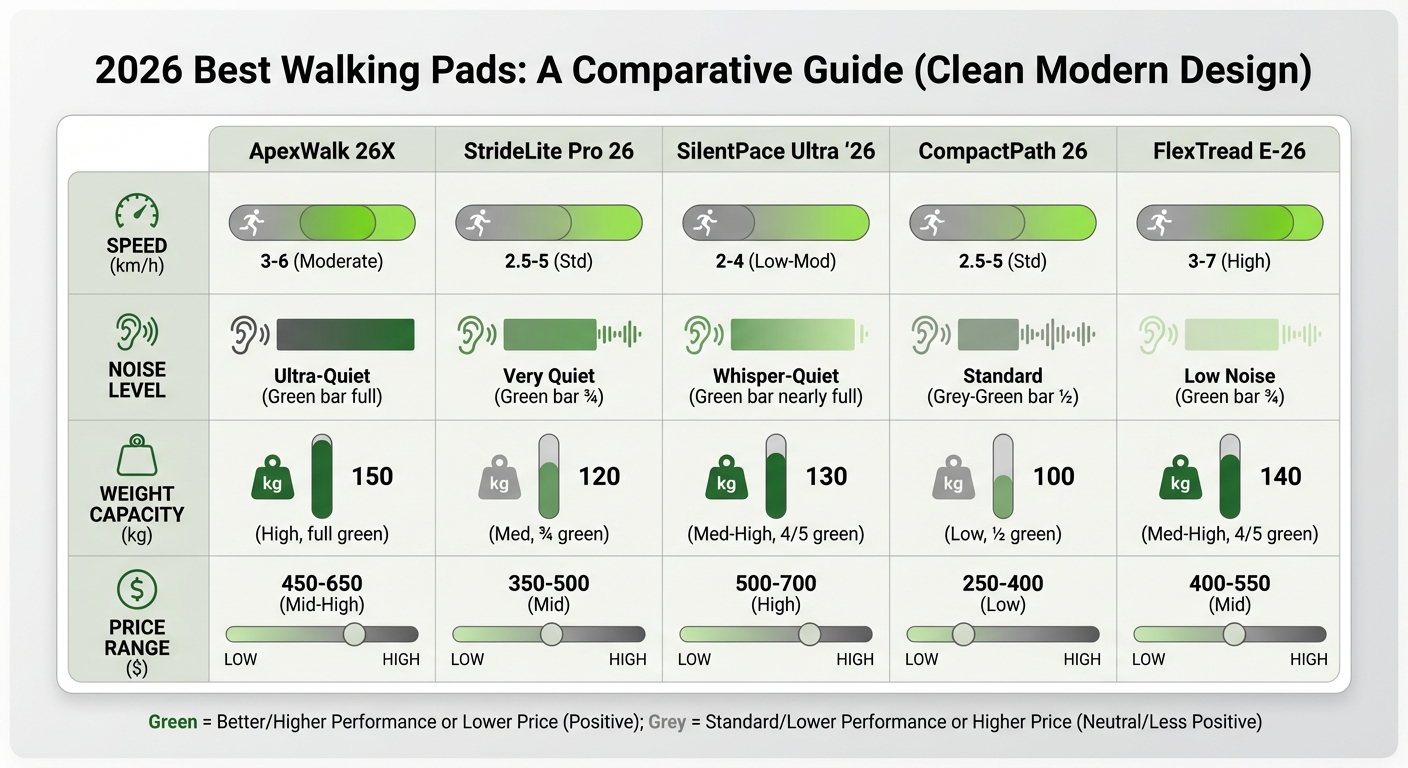
| Feature | Walking Pad | Traditional Treadmill |
|---|---|---|
| Price Range | $150–$500 | $500–$3,000+ |
| Max Speed | 4–8 mph | 10–12+ mph |
| Running Deck Length | 42"–48" | 50"–60" |
| Running Deck Width | 15"–17" | 18"–22" |
| Incline Options | None (most models) | Manual or power incline (up to 15%) |
| Motor Power | 0.5–2.0 HP | 2.0–4.0 CHP |
| Noise Level | 40–50 dB (quiet) | 55–70+ dB |
| Footprint During Use | ~2 × 5 feet | ~3 × 7 feet |
| Storage Height | 4–6 inches (flat) | Folds to ~5 × 2.5 feet upright |
| Handrails | No (most models) | Yes |
| Console/Display | Basic LED or app-only | Full console with programs |
| Weight Capacity | 220–280 lbs | 300–400+ lbs |
| Ideal User | Home office workers, small-space dwellers | Runners, dedicated exercisers |
| Best For | Walking while working | Cardio training and running |
Speed and Performance
This is where the walking pad vs treadmill distinction becomes most pronounced. Walking pads are engineered for a specific speed range: 0.5–4.0 mph for walk-only models, and up to 6.0–8.0 mph for dual-mode models that support light jogging. Traditional treadmills typically start at 0.5 mph and reach 10–12 mph, with commercial-grade models pushing to 15+ mph.
For walking, both machines perform adequately. At 2.0–3.0 mph — the sweet spot for desk work — a walking pad and treadmill feel nearly identical in terms of gait comfort. The difference becomes apparent as speed increases. A walking pad's shorter belt (42–48 inches vs 50–60 inches on a treadmill) means your stride is more constrained, and at faster walking speeds or light jogging, you may feel the belt length limiting your natural stride.
For running, the treadmill is decisively superior. The longer deck accommodates a full running stride, the more powerful motor maintains consistent speed under load, and the handrails provide a safety net during intense intervals. Running on a walking pad — even one rated for 6–8 mph — carries genuine safety risks due to the shorter deck and absence of grab bars.
If you're serious about running as part of your fitness routine, a walking pad should be considered a complement to your training, not a replacement for a treadmill or outdoor running. Low-impact movement for sciatica relief, for example, pairs naturally with a walking pad routine, but marathon training requires dedicated treadmill miles.
Space and Storage
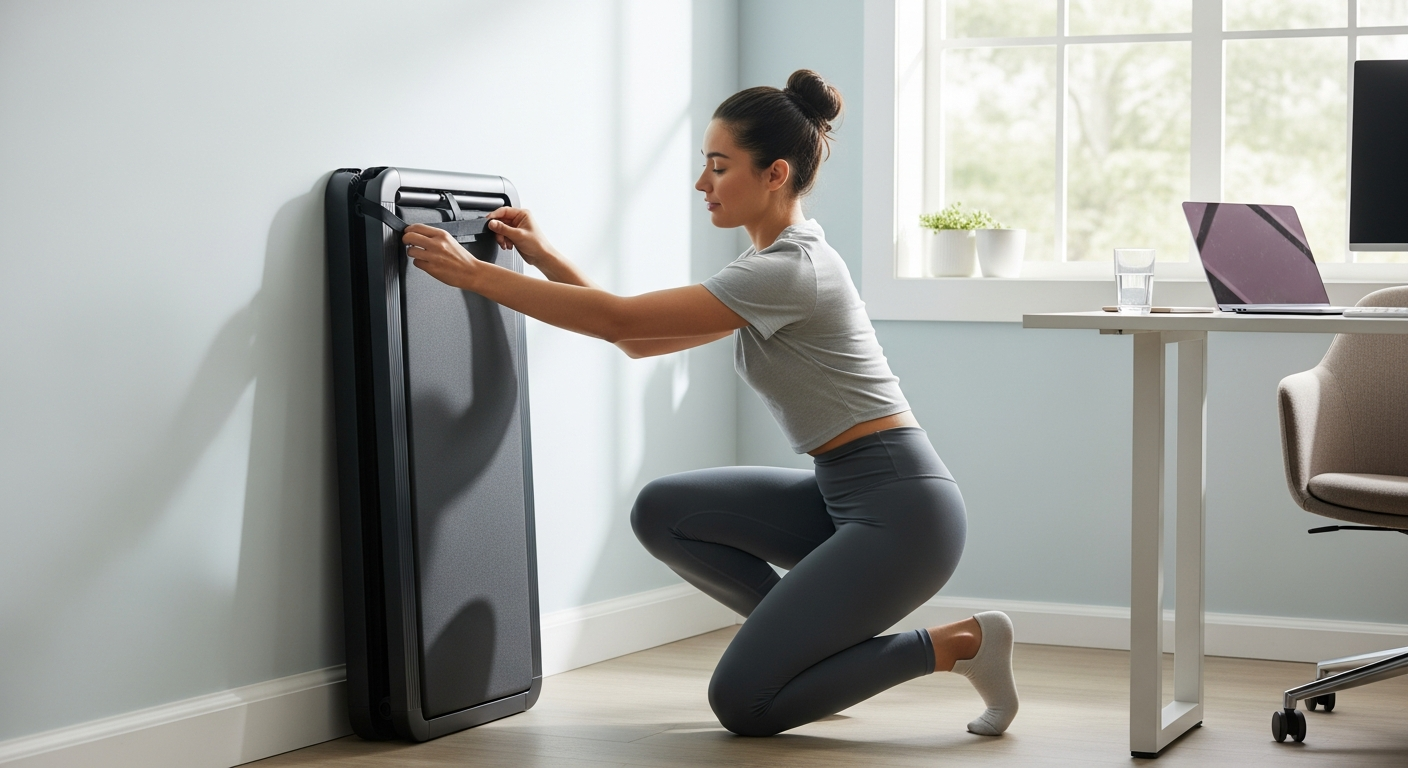
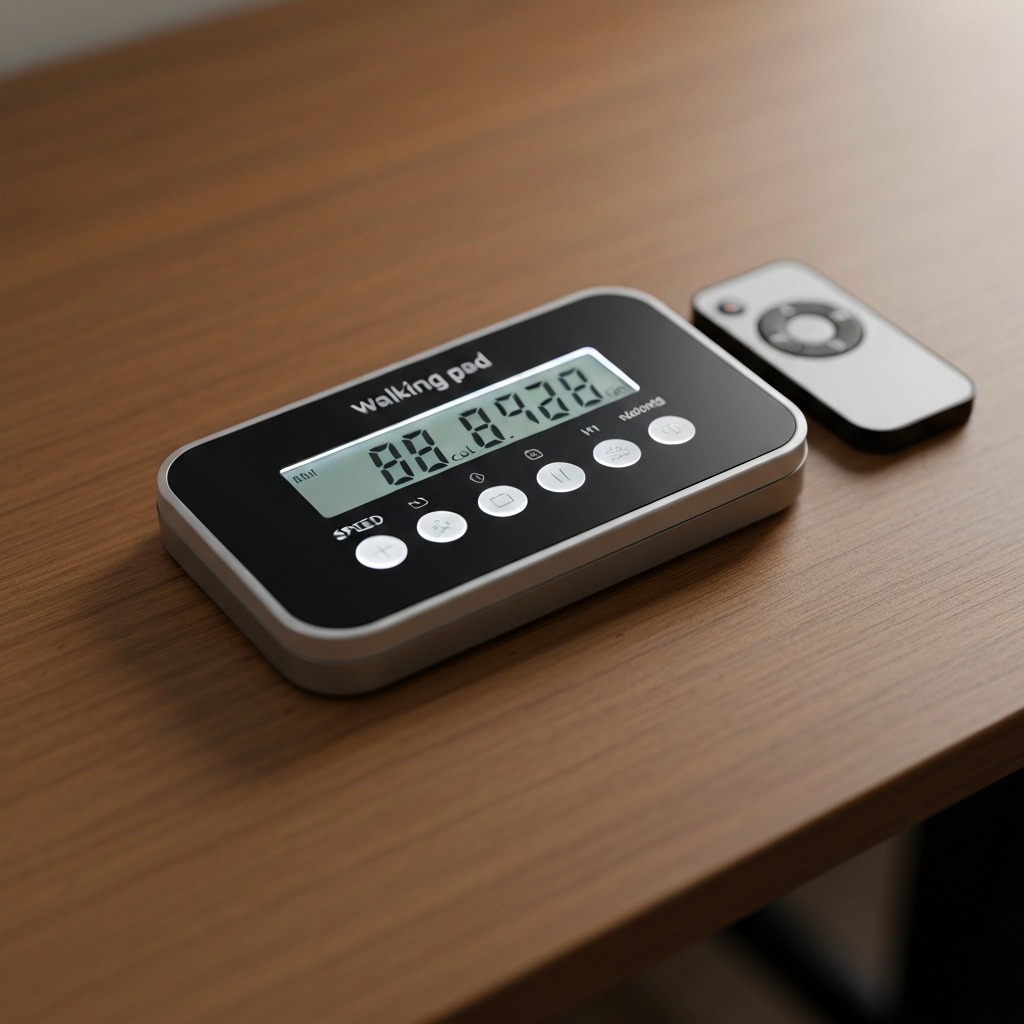
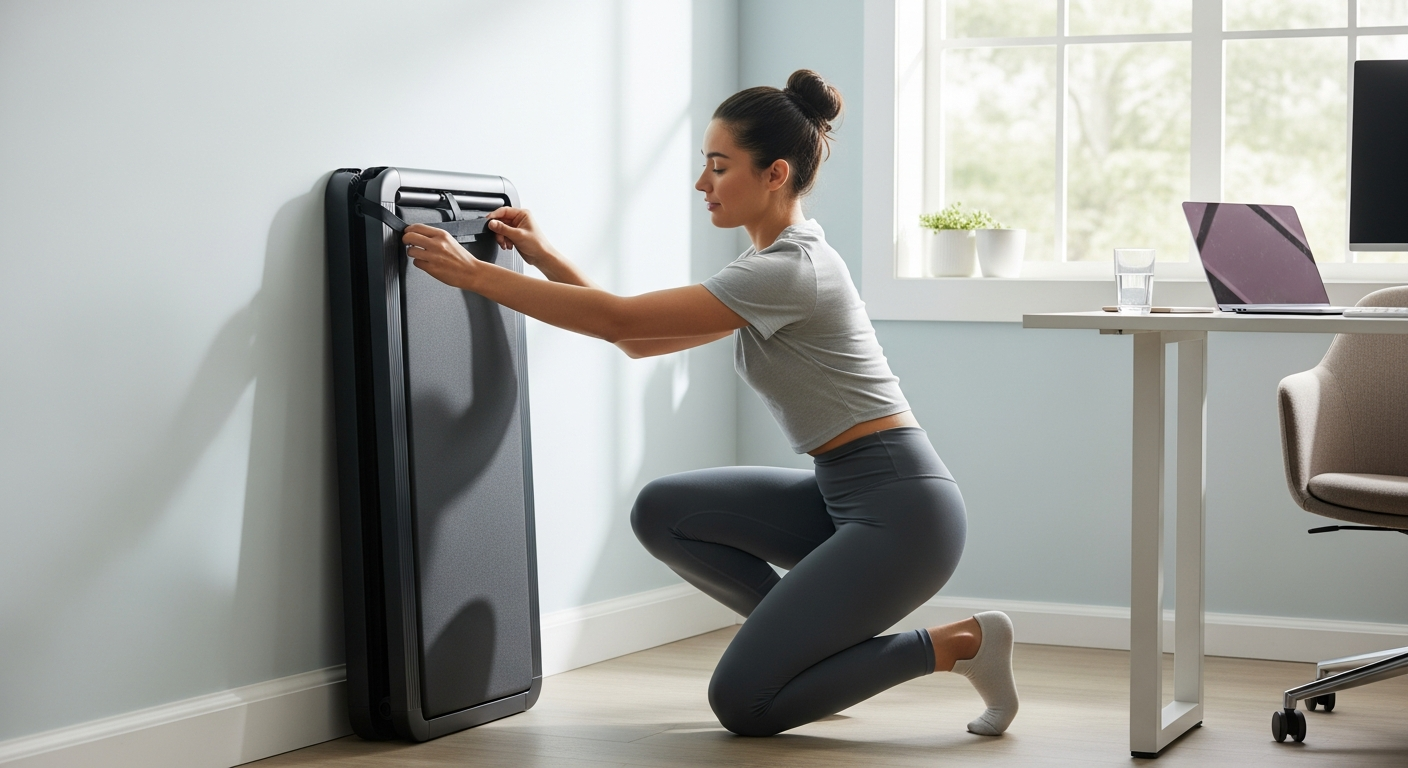
Space is the single biggest practical advantage of a walking pad over a treadmill. A walking pad occupies roughly 2 feet by 5 feet during use — about the same as a large welcome mat. When you're done, most models either fold in half (halving their footprint) or sit flat at 4–6 inches tall, sliding under a bed, couch, or standing desk.
Traditional treadmills, even folding models, demand a minimum footprint of 3 by 7 feet during use. When folded, they typically stand in a 2.5-foot-wide by 5-foot-tall upright position, which still requires dedicated floor or wall space. For apartment dwellers, renters, or anyone with an open-plan living space, this footprint difference is often the deciding factor.
Consider your actual living situation honestly. A treadmill requires a room — or at least a corner — where it will live permanently. Every day you need to unfold, set up, or navigate around a large machine is a day you're slightly less likely to use it. Walking pads sidestep this friction entirely.
If you're unsure whether your space can accommodate a treadmill, measure carefully before buying. And if it can't, browse our walking pad buying guide for options that work in tighter spaces.
Noise Levels
Walking pads are designed to operate quietly. Most quality models produce 40–50 dB at walking speeds — roughly equivalent to a quiet conversation or a library background noise level. This makes them practical for apartment living, home offices, and situations where a loud machine would disrupt work, calls, or household members.
Traditional treadmills are significantly louder. Even quality home models produce 55–65 dB during normal operation, and at higher speeds or incline, noise levels can reach 70+ dB — comparable to a vacuum cleaner. Cheaper treadmills with lower-quality motors tend to be the loudest, as motor strain creates additional vibration noise.
The noise factor matters more than most buyers initially realize. A treadmill at 65 dB makes Zoom calls difficult, disturbs sleeping family members in adjacent rooms, and can draw noise complaints in apartments. If you live in a multi-unit building, a walking pad's quiet operation is practically a requirement, not a luxury.
For people combining a walking pad with a standing desk setup, the near-silent operation is what makes the combination viable. You can take a phone call, attend a video meeting, or focus on deep work without the treadmill drowning out conversation or concentration.
Price and Value
Walking pads are substantially less expensive than traditional treadmills across all quality tiers. Here's how the market breaks down:
Walking Pad Pricing:
- Budget models ($150–$200): Basic walk-only pads with simple remotes and no app connectivity. Adequate for occasional use.
- Mid-range ($250–$400): The sweet spot. Quiet motors, app connectivity, solid build quality. WalkingPad X21, UREVO 2S, Sperax.
- Premium ($400–$500): Enhanced features, wider belts, higher weight capacities, better motors.
Traditional Treadmill Pricing:
- Entry-level ($500–$800): Basic treadmills with limited features, smaller decks, and motors that strain at higher speeds.
- Mid-range home ($800–$1,500): Solid home treadmills with decent motors, preset programs, and adequate running decks. Think NordicTrack, Sole, Horizon.
- High-end ($1,500–$3,000+): Commercial-grade home machines with powerful motors, large touchscreens, decline options, and premium build quality.
For most people buying a home cardio machine for the first time, the price-to-use ratio favors walking pads. If you spend $400 on a quality walking pad and use it daily for two years, your cost per session is under $0.55. A $1,000 treadmill used twice a week costs roughly $9.60 per session — and many treadmills end up as expensive clothes racks within 18 months.
That said, value depends entirely on usage. If you're a committed runner who will use a treadmill four times per week, spending $1,200 on a quality machine makes financial sense. If you're buying to aspirationally "run more," a walking pad is the more honest purchase.
Ideal Use Cases
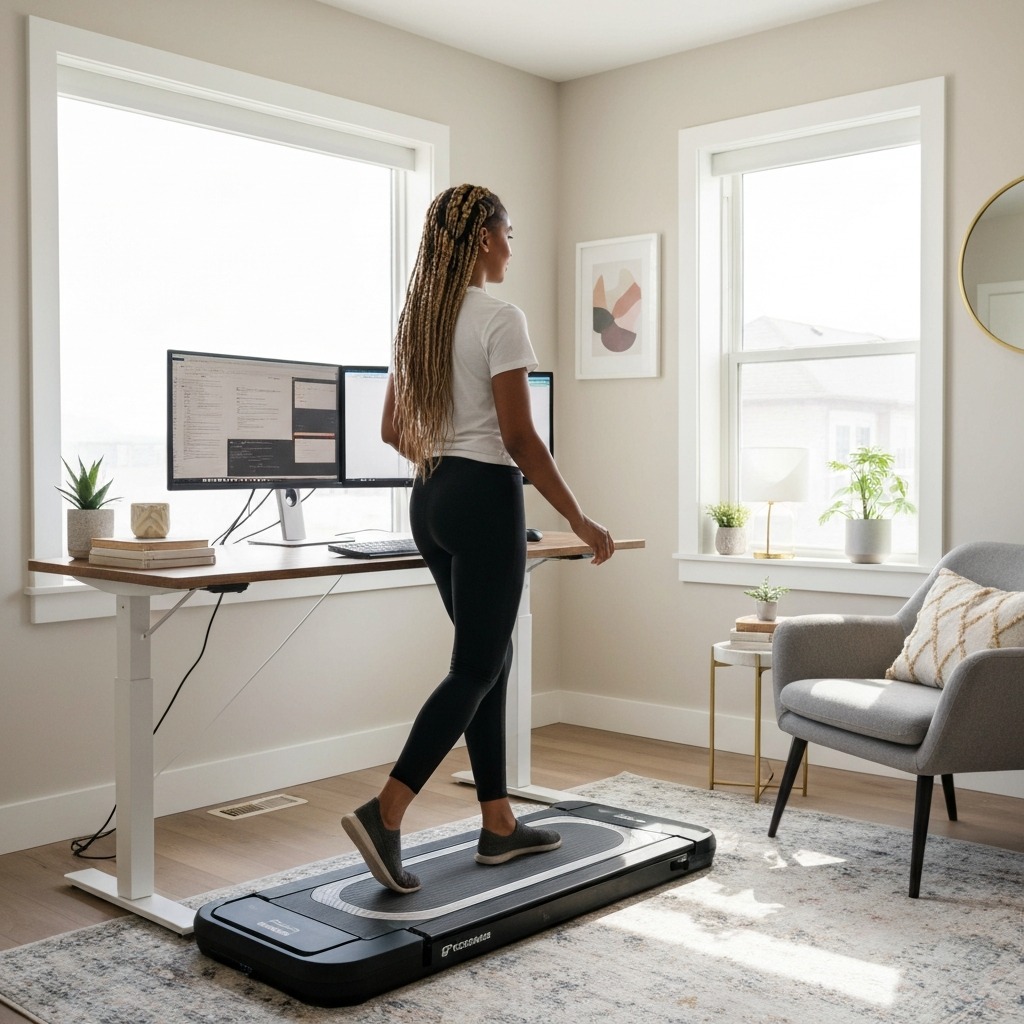
The walking pad vs treadmill decision ultimately comes down to how you intend to use the machine. Each device excels in different scenarios.
Walking Pads Excel When:
- You're working from home and want to add movement during the workday
- You live in an apartment or small space with limited storage
- You want a quiet machine that won't disrupt calls or neighbors
- Your fitness goal is adding daily steps and reducing sedentary time
- You're recovering from injury and need low-impact, low-speed movement
- You want to watch TV or read while getting light exercise
- You're pairing it with a standing desk setup
Traditional Treadmills Excel When:
- You're training for a running event (5K, 10K, half marathon)
- You want high-intensity cardio or HIIT workouts
- You prefer preset workout programs with incline variations
- You need a machine that multiple users of different fitness levels will share
- Your workouts are dedicated sessions, not incidental movement
- You want incline training to target different muscle groups
- You're willing to dedicate permanent floor space to a fitness machine
One often-overlooked factor: your personality type matters. People who thrive on structured, dedicated workout sessions tend to get more out of treadmills. People who prefer passive, integrated movement throughout the day tend to get more value from walking pads.
Who Should Buy a Walking Pad Instead
A walking pad is the better choice for the majority of home use scenarios in 2026, particularly as remote and hybrid work remain the norm. Specifically, buy a walking pad if:
Remote and Hybrid Workers
If you work from home even three days per week, a walking pad is one of the highest-ROI equipment investments you can make. Pairing it with a standing desk lets you walk during meetings, process emails, and handle routine tasks without disrupting your work. Over a year, this can add 500,000+ steps without requiring a single trip to the gym.
Apartment and Condo Dwellers
A walking pad's compact footprint and quiet operation make it the only cardio machine practical for most apartment living situations. A traditional treadmill in an apartment building often means noise complaints, dedicated floor space you don't have, and a machine you can't store when guests visit.
People Starting a Fitness Journey
If you're new to regular exercise or returning after a long break, walking pads offer a gentle entry point. Starting at 1.0–1.5 mph and gradually increasing speed is far less intimidating than launching into a treadmill run. The low-impact nature also reduces injury risk for beginners.
People With Chronic Pain or Mobility Limitations
Walking pads provide controlled, flat-surface walking at adjustable speeds. For people managing back pain, sciatica, joint issues, or balance concerns, a walking pad offers a safer environment than a traditional treadmill. Walking to relieve sciatica, for example, is well-supported by clinical evidence, and a walking pad makes that kind of consistent, low-intensity movement practical. You can read more about low-impact movement for back pain relief at our sister site SciaticaSpot.com.
Anyone Who Hates "Exercise Time"
If the idea of scheduling a dedicated 45-minute treadmill session sounds like a barrier to ever exercising, a walking pad removes that friction. You walk while you work. No schedule, no changing clothes, no gym commute. The steps add up invisibly.
Who Should Buy a Traditional Treadmill Instead
Despite the walking pad's many advantages, a traditional treadmill is the right choice in specific scenarios:
Runners Training for Events
If you're training for any running event — a 5K, 10K, half marathon, or marathon — a walking pad cannot substitute for a proper treadmill. The belt length, motor power, speed range, and incline options all matter for running performance, and a walking pad's limitations will eventually become a ceiling on your training.
People Who Want Serious Cardio Workouts
HIIT workouts, calorie-burning interval sessions, and incline training all require the power and features a treadmill provides. Walking pads are not designed for sustained high-speed or high-incline use, and pushing them beyond their design parameters risks both your safety and the machine's longevity.
Larger or Heavier Users
Most walking pads have weight capacities between 220 and 280 lbs. Heavier users who want a safe, stable walking experience may find a treadmill's heavier frame and wider belt more confidence-inspiring. Treadmills commonly support 300–400+ lbs, with some commercial models reaching 500 lbs.
Fitness Enthusiasts Who Want Programmed Workouts
If you enjoy following structured workout programs — timed intervals, hill climbs, heart rate zone training — treadmills deliver this natively. Walking pads typically offer only manual speed control and basic app tracking, not the programmatic variety that keeps workouts interesting over time.
Setup and Maintenance
Both walking pads and treadmills require some assembly, but walking pads are generally easier to set up. Most walking pads arrive partially assembled and require only unfolding, leveling, and a quick power-on. Treadmills, even folding home models, require more involved assembly including console mounting, belt tensioning, and sometimes motor connection.
Walking Pad Maintenance:
- Belt lubrication every 3–6 months (silicon-based treadmill lubricant)
- Periodic belt alignment checks (most models include an Allen wrench for this)
- Wipe down the belt and frame monthly to prevent dust buildup
- Store in a dry, temperature-stable environment
Treadmill Maintenance:
- Belt lubrication every 3–6 months (more frequently with heavy use)
- Regular belt alignment and tension checks
- Motor and electronics inspection (annually for heavy users)
- Lubrication of folding hinges if applicable
- Higher complexity due to more moving parts
Walking pads have fewer moving parts and simpler mechanics, which translates to lower long-term maintenance costs and fewer things that can go wrong. Treadmills have motors, belts, rollers, and electronic consoles — all of which are potential failure points over time.
Health Benefits Compared
Both walking pads and treadmills deliver cardiovascular benefits when used consistently. The health research on walking and running for cardiovascular health, metabolic function, and mental wellbeing is robust and well-established. However, the intensity and nature of the exercise differ meaningfully.
Benefits Both Provide:
- Improved cardiovascular health and aerobic capacity
- Calorie burning and contribution to weight management
- Reduced sedentary time and associated health risks
- Improved mood and stress reduction
- Better sleep quality with regular use
- Maintained muscle tone in lower body
Walking Pad-Specific Benefits:
- Lower impact on joints, making it accessible for older adults and those with arthritis
- Sustainable for longer durations (hours of light walking vs. 30-minute intense sessions)
- Easier to integrate into daily routines without "exercise time"
- Lower risk of overuse injury compared to running
Treadmill-Specific Benefits:
- Higher caloric burn per session due to running intensity
- Incline training builds muscle and increases cardiovascular demand
- Greater VO2 max improvements with high-intensity running
- More efficient use of time for people with limited workout windows
The American College of Sports Medicine (ACSM) recommends 150 minutes of moderate-intensity aerobic exercise per week for general health. Both walking pads and treadmills can help you meet this guideline — the best machine is the one you'll actually use consistently.
For people with sedentary office jobs, the walking pad's ability to distribute movement throughout the workday may provide additional benefits beyond structured exercise, including reduced back pain, improved circulation, and better blood sugar regulation from not sitting for prolonged periods.
Common Mistakes to Avoid
Whether you choose a walking pad or a treadmill, these are the most common mistakes buyers make:
Buying the Wrong Machine for Your Space
Measure your available space twice before purchasing. A treadmill that sits in the middle of your living room because "it'll be fine" becomes a daily obstacle and a barrier to use. Walking pads solve this problem by design, but even they need 2 × 5 feet of clear floor space.
Setting Unrealistic Usage Expectations
Aspiring to run 5 days per week on a treadmill when you've never maintained a gym routine is a recipe for an expensive clothes hanger. Be honest with yourself: a walking pad used 3 days per week during work hours will deliver more movement than a treadmill sitting dormant 6 days per week.
Ignoring Noise Before Purchase
Test the machine at the speed you intend to use it before committing. A treadmill that sounds fine at 3 mph may be unbearably loud at 5 mph — which is exactly where a committed user will push it.
Buying Based on Price Alone
Budget walking pads under $150 often have underpowered motors, poor belt quality, and short lifespans. Similarly, entry-level treadmills under $500 frequently strain at higher speeds and develop belt-alignment issues within months. Investing in the mid-range of either category typically delivers significantly better long-term value.
Skipping the Mat
A rubber treadmill mat (under either machine) reduces vibration noise, protects your floor, and extends the machine's lifespan by preventing dust ingress. It's a $20–$40 accessory that delivers disproportionate value.
Not Adjusting Your Desk Setup
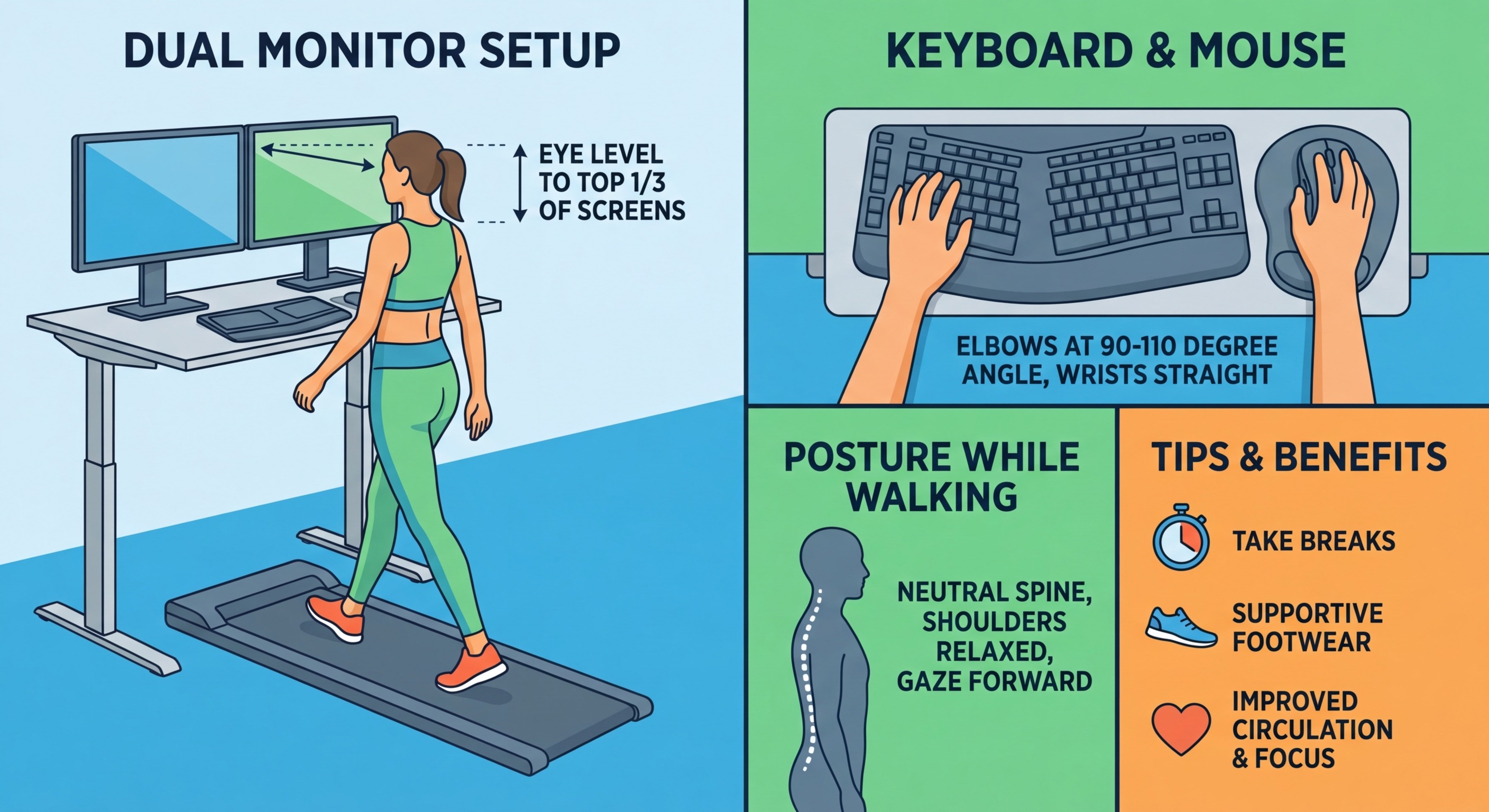
For walking pad users, your standing desk height may need adjustment when you start walking. Walking at 2 mph on a pad adds 4–6 inches of effective height, which can throw off your monitor and keyboard positioning. Budget time to recalibrate your ergonomic setup.
Frequently Asked Questions
What is the main difference between a walking pad and a treadmill?
The main difference is size and purpose. Walking pads are ultra-compact, low-profile machines designed primarily for walking at speeds up to 4–8 mph, often used under a standing desk. Traditional treadmills are larger, more powerful machines capable of running at speeds up to 10–12+ mph, with longer belts, incline options, and more advanced programming.
Can a walking pad replace a treadmill for exercise?
A walking pad can partially replace a treadmill for walking and light jogging, but it cannot replace a treadmill for running, high-intensity training, or workouts requiring incline. If your exercise goals are limited to adding daily steps and light movement, a walking pad may suffice. For cardio training or running, a traditional treadmill is necessary.
Which is better for a home office setup?
A walking pad is far better for a home office. Its ultra-compact footprint (roughly 5 inches tall), quiet motor, and under-desk design make it ideal for use while working. Traditional treadmills are too large, loud, and designed for dedicated exercise sessions, not simultaneous work.
How much space does a walking pad vs a treadmill need?
Walking pads require approximately 2 × 5 feet of floor space during use and can be stored flat (5 inches tall) under furniture or folded into a 2 × 2.5-foot upright position. Traditional treadmills require 3 × 7 feet or more of dedicated floor space and are typically permanent fixtures.
Are walking pads cheaper than treadmills?
Yes, walking pads typically cost $150–$500, while traditional treadmills range from $500–$3,000+ for home models. The average quality walking pad runs $250–$400, while a comparable home treadmill starts around $800–$1,200.
Can you run on a walking pad?
Most walking pads max out at 4–8 mph, which allows for light jogging but not sustained running. Running on a walking pad can also be unsafe due to shorter deck lengths and the lack of handrails. If running is a goal, a treadmill with a 50-inch+ belt and 10+ mph top speed is the better choice.
Which is quieter — a walking pad or a treadmill?
Walking pads are significantly quieter, typically operating at 40–50 dB at walking speeds. Traditional treadmills commonly produce 55–70+ dB, especially at higher speeds or on incline. The quieter operation makes walking pads practical for apartments, home offices, and shared living spaces.
How long do walking pads and treadmills last?
A quality walking pad used daily should last 2–4 years with proper maintenance (belt lubrication, cleaning, proper storage). Traditional treadmills typically last 5–10 years with regular maintenance, due to heavier-duty construction. Motor quality and build materials are the primary longevity factors in both categories.
Do walking pads have screens and workout programs?
Most walking pads have basic LED displays showing speed, time, distance, and calories. App connectivity via Bluetooth is common in mid-range models, offering session tracking and goal setting. Traditional treadmills typically have full-color touchscreen consoles with dozens of preset workout programs, heart rate monitoring, and sometimes streaming integrations.
Can I use a walking pad with any standing desk?
Yes, walking pads work with virtually any standing desk, though desks need enough height range to accommodate the added elevation (typically 4–6 inches). Electric standing desks with a wide height range are ideal. Also ensure your desk is deep enough that the walking pad doesn't protrude from the front. For the best setup tips, see our walking pad while working guide.
Final Recommendation
For most people in 2026 — particularly remote workers, apartment dwellers, and anyone whose fitness goal is consistent daily movement rather than structured cardio training — a walking pad is the smarter home purchase. It costs less, takes up a fraction of the space, operates quietly enough for work-from-home use, and delivers genuine health benefits through the mechanism of reducing sedentary time.
The treadmill's domain is dedicated fitness training: running, HIIT, incline work, and programmed cardio sessions. If you're an aspiring or active runner, a treadmill is a worthwhile investment. But for everyone else, the walking pad's frictionless integration into daily life makes it the more practical — and more likely to actually be used — choice.
Still unsure? Take our quiz: Are you a walker or a runner? If your answer is "walker" (or "I'd like to be more active but I hate scheduled workouts"), start with a walking pad. Browse our best walking pads of 2026 for top-rated options across every budget.
If you're committed to running or HIIT training and have the space for a permanent machine, explore our walking pad buying guide for a broader picture of the cardio equipment landscape.
Sources & Methodology
-
American College of Sports Medicine (ACSM). Physical Activity Guidelines for Adults. ACSM's Guidelines for Exercise Testing and Prescription, 11th Edition.
-
Harvard Medical School. "Walking: Your Steps to Better Health." Harvard Health Publishing, 2024.
-
British Journal of Sports Medicine. "Breaking Up Prolonged Sitting with Light Walking Reduces Postprandial Glucose and Insulin Responses." BJSM, 2022.
-
Centers for Disease Control and Prevention (CDC). "Physical Activity Basics: Adults." CDC.gov, updated 2024.
-
National Institute on Aging. "Exercise and Physical Activity: Your Everyday Guide." NIA/NIH, 2024.
-
PubMed: NCBI. "Comparison of Energy Expenditure During Walking vs. Running on a Treadmill." Journal of Sports Science & Medicine, 2023.
Dr. Alex Chen is a Fitness Equipment Specialist with over a decade of experience reviewing and recommending home fitness equipment. He holds certifications from the American Council on Exercise (ACE) and has contributed to equipment reviews featured in Runner's World and Men's Health.
Last updated: April 2026